
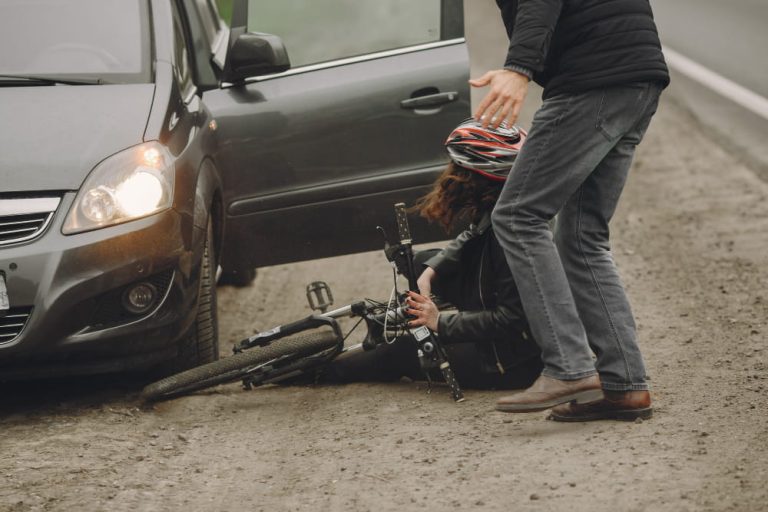
A cyclist approaches a Brooklyn intersection when a turning car crosses the bike lane, leaving little room to avoid a collision. The impact can bring medical expenses, missed work, and questions about who had the right of way. A Brooklyn bicycle accident claim may provide no-fault benefits and additional compensation when another party’s negligence caused the injury.
New York no-fault insurance can cover eligible medical costs and loss of income in the case of a car vs. bike accident. Claims depend on the details of the collision, the applicable traffic laws, and whether either party was at least partially responsible for the crash. A Brooklyn bicycle accident lawyer can go over the circumstances of the collision and what benefits and legal options are available.
Table of Contents
- What Makes a Brooklyn Bicycle Injury Claim Different?
- What Types of Bicycle Collisions Can Lead to Liability?
- Where Can a Bicycle Injury Claim Become Difficult?
- When Should You Call a Brooklyn Bicycle Accident Lawyer?
- Frequently Asked Questions
What Makes a Brooklyn Bicycle Injury Claim Different?
A bicycle case can involve both first-party insurance benefits and a separate dispute over who caused the collision.
Which Road User May Be Responsible for the Collision?
A Brooklyn bicycle accident claim usually starts with how the crash happened. New York Vehicle and Traffic Law § 1146 requires drivers to use due care to avoid hitting bicyclists. Section 1231 gives cyclists roadway rights while also requiring them to follow many traffic rules that apply to motorists.
In bicycle crash liability NYC cases, the evidence may show that the cyclist made an unsafe turn, did not yield, was speeding, was distracted, passed too closely, or a door was opened into the path of the cyclist. The actions of the cyclist are also relevant in bicycle crash liability NYC cases. Section 1234 generally directs cyclists to use available bike lanes or the right side of the road, except when turning or due to unsafe conditions.
How Are a Cyclist’s Initial Medical Bills Covered?
A Brooklyn cyclist injury involving a cyclist hit by car traffic can fall under New York’s no-fault system. New York appellate courts have specifically recognized that cyclists struck by motor vehicles can qualify as covered persons under Article 51.
NY bicycle no-fault benefits can cover up to $50,000 in qualifying economic losses, including medical expenses, lost earnings, and certain other costs. Submission of an accident report in writing should be done within 30 days. Healthcare bills normally require a 45-day settlement, but lost-wage proof requires settlement within 90 days.
What Types of Bicycle Collisions Can Lead to Liability?
The road layout, traffic controls, vehicle movement, and actions of both people often decide how responsibility is divided.
Could a Bike-Lane Conflict Make the Driver Liable?
Yes. A bike lane crash may happen when a driver turns through a bicycle lane, enters it without proper care, backs into it, passes too closely, or ignores a traffic signal.
Imagine a rider traveling in a marked Brooklyn bike lane when a driver turns across the lane into a driveway. The investigation may focus on right of way, traffic lights, vehicle positions, video, and witness accounts. Being inside the bike lane can be important evidence, but it does not automatically prove the driver was entirely responsible.
Which Evidence Can Reconstruct How the Crash Occurred?
Useful evidence may include:
- photographs of the bicycle and vehicle;
- bike-lane markings and intersection layout;
- traffic lights and signs;
- witness information;
- NYPD collision records;
- bicycle-camera or dashcam footage;
- nearby surveillance video;
- medical records; and
- the damaged bicycle, helmet, or clothing.
The bicycle itself may become important when the parties disagree about impact direction or vehicle movement. Avoid repairing or discarding badly damaged equipment before its possible evidentiary value is considered.
Where Can a Bicycle Injury Claim Become Difficult?
Problems often arise when evidence disappears, or fault is assumed without checking the actual traffic rules and crash details.
Does a Cyclist’s Own Conduct Affect Recovery?
Yes. Cyclists have roadway rights, but they also have duties involving traffic signals, direction of travel, turns, lane use, lighting, and right of way. Recent New York bicycle cases continue to examine both driver and cyclist conduct when deciding liability.
For motor-vehicle personal-injury actions subject to Article 51 and commenced on or after May 26, 2026, CPLR § 1411 bars recovery when claimant’s fault exceeds that of the defendant or combined defendants’. If not applicable, the cyclist’s percentage of fault may be taken into account to reduce recovery.
How Can Treatment Gaps and Lost Evidence Weaken the Case?
A long unexplained treatment gap may lead an insurer to question whether the crash caused the injury or whether the condition remained serious. Video can disappear just as quickly. Witnesses may become harder to find, and damaged equipment may be repaired or thrown away.
A separate requirement applies to pain-and-suffering claims: Insurance Law § 5104 generally requires a covered person to prove that he or she sustained a statutory serious injury in order to recover noneconomic damages. The former 90/180-day category has been eliminated for actions commenced on or after May 26, 2026.
When Should You Call a Brooklyn Bicycle Accident Lawyer?
Early review may be more useful when the injuries are serious, fault is disputed, insurance is uncertain, or important evidence could disappear.
What Crash Factors Call for Prompt Investigation?
A case may deserve closer attention after a fracture, head injury, surgery, lengthy rehabilitation, or substantial time away from work. A hit-and-run, uninsured driver, commercial vehicle, or government vehicle can add more questions.
Denied no-fault benefits can also be a problem. Surveillance video footage in stores, apartment buildings, or in the neighboring complex is not often kept for a very long time. A minor bicycle accident with little injury involved does not always need a heavy court battle.
How Can Counsel Evaluate Fault, Insurance, and Damages?
A Brooklyn bicycle accident lawyer can secure police reports, find witnesses, preserve video evidence, inspect the roadway for possible defects, and ascertain the identity of the driver and vehicle owner. Insurance coverage may include liability and no-fault benefits, and potential MVAIC coverage in the case of an uninsured or hit-and-run driver.
A counsel can also review possible contributory negligence, medical expenses and loss of earnings, and the serious-injury threshold. CPLR § 214 generally provides three years to commence an ordinary personal-injury negligence action. Claims against government defendants often have significantly shorter statute-of-limitations periods.
Frequently Asked Questions
Does New York No-Fault Coverage Extend to Cyclists?
Yes. Cyclists struck by covered motor vehicles can qualify for New York no-fault benefits.
Where Does a Cyclist Seek No-Fault Benefits?
A cyclist struck by an insured vehicle generally seeks benefits through that vehicle’s insurer. Hit-and-run or uninsured cases may involve MVAIC.
How Does Shared Fault Change a Cyclist’s Recovery?
Shared fault can reduce damages. In current Article 51 cases, recovery can also be barred when the cyclist’s fault exceeds the combined fault of the defendants.
What Roadway Rights and Duties Apply to Cyclists?
VTL § 1231 gives cyclists roadway rights while imposing many of the same duties that apply to motorists.
When Does the Brooklyn Bicycle Lawsuit Deadline Expire?
Ordinary personal-injury negligence actions generally have a three-year filing period. No-fault and government-claim deadlines can arrive much sooner.